When to Trim Trees in Kansas: A Homeowner's Guide
When is the best time to trim trees in Kansas? For most shade trees, late winter, roughly January through March, is a good choice. Trees are dormant, bare branches are easier to see, and pruning wounds generally have time to begin closing as spring growth starts. There are exceptions, though, especially for oaks and trees with structural problems.
Around Manhattan, Riley County, and the Flint Hills, timing matters. Hot summers, strong winds, and Kansas ice storms can all put stress on branches. A little thoughtful pruning can help a tree stay healthy without taking away the shade and character you love.
Can You Trim Trees in the Fall?
You can remove small, dead branches when you find them, provided they are safe to reach. For routine shaping or larger cuts, waiting until the tree is dormant is usually better. Avoid pruning when branches are coated with ice or temperatures make wood brittle.
Before winter storms arrive, look for cracked limbs, branches rubbing together, and deadwood hanging over walkways. Remember that a branch can be dangerous even when it looks small from the ground.
What Can You Safely Trim Yourself?
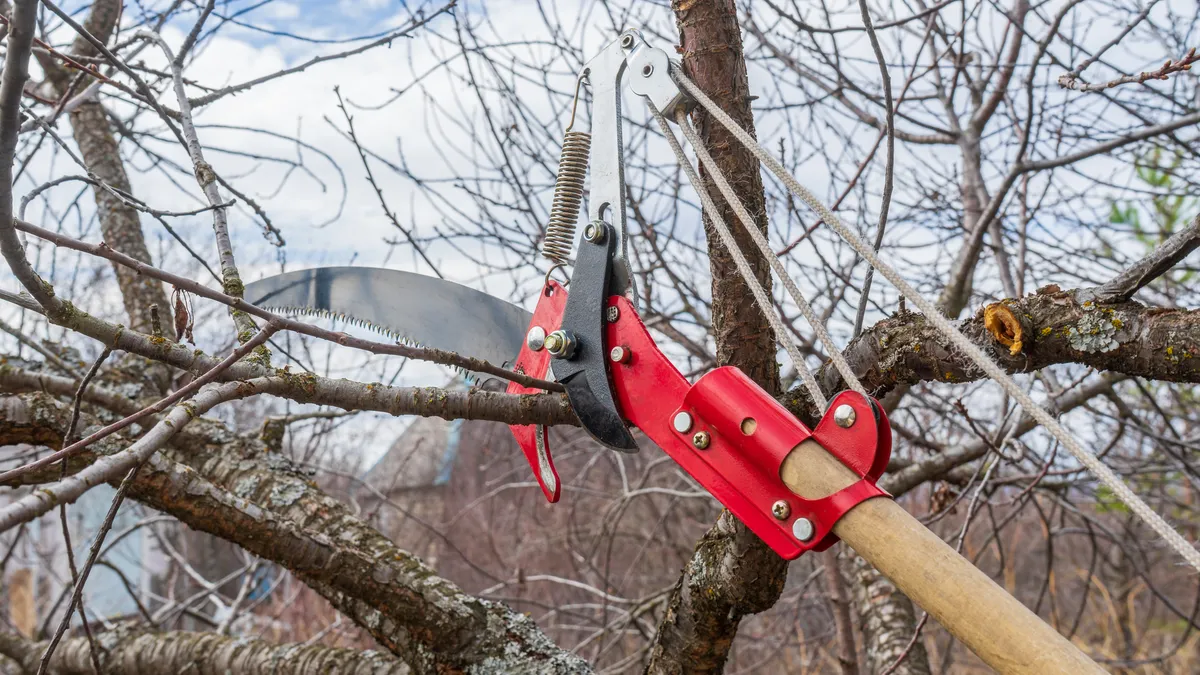
A pair of hand pruners, loppers, or a properly handled pole saw can make quick work of small branches while your feet stay firmly on the ground. Start with dead, damaged, or crossing twigs, and make clean cuts just outside the branch collar. Don't leave long stubs or cut flush against the trunk.
Avoid removing too much living growth at once, and never top a tree to make it shorter. Topping encourages weak new growth and can leave lasting damage.
Larger limbs, chainsaw work, climbing, and anything near power lines are jobs for trained professionals. A heavy branch can twist or fall unexpectedly, even when the cut seems straightforward. Keep this distinction in mind as you look through the trees below.
When to Trim Common Kansas Trees
Ash
Best time: Late winter, while dormant.
Green ash and white ash both grow in Kansas. Before trimming, look for signs of emerald ash borer, including thinning upper branches, D-shaped exit holes, and unusual woodpecker activity. Pruning won't solve an infestation. If the canopy is already declining, get the tree assessed before removing substantial limbs.
Bradford Pear
Best time: Late winter for limited corrective pruning.
Bradford pears have attractive spring blossoms, but their narrow branch angles make them prone to splitting as they mature. They are also a cultivar of Callery pear, an invasive tree that spreads into Kansas natural areas and competes with native plants. Kansas has announced restrictions on Callery pear beginning in January 2027, although homeowners are not required to remove existing trees. For many yards, replacing an established Bradford pear with a better-suited tree makes more sense than repeated trimming.
For more information, see our article on the Kansas Callery pear buyback and taking down a Bradford pear.
Cottonwood
Best time: Late winter.
Eastern cottonwoods grow quickly and can become enormous. Focus on small, damaged branches on young trees rather than trying to reshape an established canopy. Mature cottonwoods may shed substantial limbs during storms, so take unusual cracks or hanging branches seriously.
Elm
Best time: Late winter.
American elm, slippery elm, and Siberian elm can all be found in Kansas. Remove crossing branches while they're small, and avoid unnecessary pruning during the growing season, when elm bark beetles may be active. Dutch elm disease is a concern, especially for susceptible elms. Siberian elms often develop weak, crowded growth, so early structural pruning is particularly useful.
Hackberry
Best time: Late winter.
Common hackberry is a hardy Kansas shade tree. Young trees benefit from selecting well-spaced branches and correcting narrow forks. Mature trees generally need only selective removal of dead, rubbing, or damaged wood. Small bumps on leaves are often insect galls and aren't, by themselves, a reason for heavy pruning.
Honey Locust
Best time: Late winter.
Thornless honey locust cultivars are popular in landscaped yards, while native honey locust can have formidable thorns. Prune young trees to encourage a balanced structure and remove branches that rub. Check carefully for thorns before handling branches, especially on volunteer trees or thorn-bearing varieties.
Mulberry
Best time: Late winter.
Red mulberry is native to Kansas, while white mulberry is also widespread. Both can grow vigorously, and white mulberry often sprouts readily after hard cutting. Remove unwanted shoots and crossing branches early instead of repeatedly cutting back large limbs. If fruit is dropping onto a patio, modest thinning is better than severe topping.
Oak
Best time: Winter dormancy, preferably during the coldest part of winter.
Oaks deserve extra attention because fresh pruning wounds can attract insects involved in spreading oak wilt. Red-oak-group trees, including northern red oak and pin oak, are particularly vulnerable. White-oak-group trees are generally less susceptible, but careful timing still matters. Avoid routine pruning during warmer periods when disease transmission risk is higher. If an oak develops sudden leaf browning or branch decline, seek a diagnosis before cutting.
Osage-Orange
Best time: Late winter.
Osage-orange, sometimes called hedge apple, is tough and often develops dense, twisting branches. Older trees can have heavy, awkward limbs, and some have substantial thorns. On young trees, select a few sound branches to build a manageable shape. Resist cutting deep into a mature, tangled crown simply to tidy its appearance.
Walnut
Best time: Late winter.
Black walnut is common in Kansas. Its broad limbs need room to develop, so young trees benefit from thoughtful branch spacing. Avoid large cuts unless necessary, and be aware that walnuts may bleed sap after late-winter pruning. That sap flow is usually more noticeable than harmful. Keep pruning light on mature trees.
A Little Care Now Can Prevent Bigger Problems Later
The best pruning cut is often the one you don't need to make. Take time to identify your tree, choose the right season, and remove only branches that serve a clear purpose. If you're uncertain about a species, a damaged limb, or the safest way to reach a branch, there's no reason to guess.
If a job feels too large or you'd simply like a second opinion, request help from a professional tree service. The form can connect you with a tree service company that can assess what your tree needs, whether that's a small trim, a closer inspection, or a larger project.